How to De-Risk Precision Ultrasonic Machining for Advanced Materials Using Surrogate Frameworks
Precision ultrasonic machining is a non-thermal, mechanical manufacturing process used to create high-tolerance features in hard, brittle materials like advanced ceramics and glass. This method utilizes high-frequency vibrations and abrasive slurry to erode material without inducing thermal stress or chemical changes. By implementing a surrogate material strategy, manufacturers can validate tool paths and parameters before processing expensive or novel substrates, significantly reducing the risk of material failure. Understanding how to de-risk precision ultrasonic machining is essential for maintaining project budgets and timelines when working with high-value substrates.
Key Takeaways
- Precision ultrasonic machining processes hard, brittle materials using high-frequency vibrations to avoid thermal stress and damage.
- Surrogate materials allow engineers to validate tool paths and parameters without risking expensive, novel production substrates.
- Defining critical geometries and matching technical properties are essential steps in the surrogate material validation framework.
- Effective collaboration with experienced fabrication partners helps prevent budget overruns and accelerates complex development project timelines.
- Selecting the right partner involves evaluating their quality control processes and ability to define success criteria.
Challenges in Machining Brittle Advanced Materials and Novel Ceramics
Material integrity and high costs pose a significant problem for machinists, especially on projects where tight tolerances and geometries are required.
- Advanced ceramics and glass are often brittle materials; the wrong move and material failure may occur, compromising the component’s structural integrity.
- While some materials in this category are common, others may be hybrid, custom materials with high development costs.
When machining advanced materials, there is a substantial risk of budget overrun—from increased cost of material fabrication—and project delays due to loss of innovation time if the process is not well thought out to protect the customer’s product and timeline.
Primary Technologies for High-Precision Micromachining of Glass and Ceramics
There are many options on the market for micromachining brittle materials like glass and ceramics for semiconductor applications as well as for other industries such as aerospace, defense, life sciences, communications, MEMs, and automotive. At Bullen, we recommend and offer 2 proprietary technologies:
- Ultrasonic Machining: a premier, non-thermal, non-chemical, non-electrical process ideal for achieving tight tolerances and complex features in hard, brittle materials.
- MicroLucent Laser Machining: Bullen’s unique laser micromachining technology for clear materials that offers no damage to substrates, no HAZ, and high throughput.
MicroLucent was developed for transparent materials while ultrasonic machining can be suited for both transparent and non-transparent ceramics or parts with blind features requiring significant material removal. If you’re not sure what path is best for your project, our knowledgeable sales engineers can help guide you in the right direction.
The Surrogate Framework: Validating Precision Ultrasonic Machining Feasibility
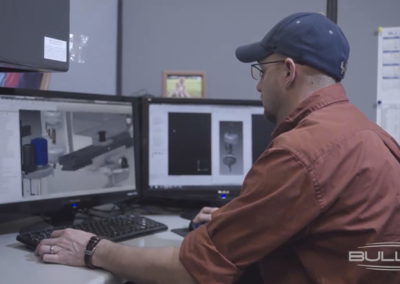
Precision ultrasonic machining for advanced materials requires rigorous testing to optimize tool paths and process parameters for complex components. Needing to test a material or the cuts that are being made with a tool can be worth it if the end process is less expensive. However, when a sample part has significant value, costs and benefits must be weighed more significantly. To mitigate the risks of complex machining tasks, we use sample or surrogate material when doing test cuts for parts that are made of hard to get or expensive materials. This approach is central to how to de-risk precision ultrasonic machining for high-stakes manufacturing.
To implement the surrogate framework, we:
- Define the critical geometries
- Select the appropriate material by matching key technical properties
- Execute the machining process on the surrogate materials to prove out the tool path and parameters
- When a material is unique enough to need specially crafted, this is also an advantage as we can move forward with testing a surrogate material while waiting for the final material to be ready.
- Analyze results and validate the process
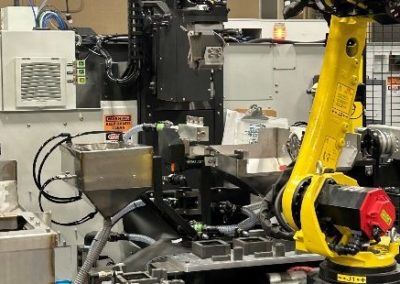
If we have an issue with our machine positioning, work holding, ultrasonic tool, or other, it is a way to make this failure much smaller than if we scrapped their only prototype. Once our team is sure we have gotten everything right, we turn to machining the real piece. In this way, we can get that first part correct without having wasted customer resources.
Cost Implications and ROI of Precision Ultrasonic Machining for Advanced Materials Fabrication
The question of cost comes down to return on investment for the customer. If a stand-in material can be used to replace the final part in testing, it is our due diligence to notify the customer and try to proceed with that route to:
- Avoid damage to expensive, novel materials
- Accelerate development timelines
- Mitigate project risk
As discussed before, an important aspect of selecting the surrogate material is knowing the novel and substitute material properties. Internal teams or fabrication partners will need to consider the options and may weigh in on the final decision as they may be most familiar with the unique material being used. Collaboration is extremely valuable during this phase of any project, which is why selecting a partner known for their collaborative problem solving is important.
Selecting a Partner for Advanced Materials Machining and Fabrication
If you are looking for a fabrication partner that can provide micromachining of an advanced ceramic, Bullen has the experience and processes to set your project up for success. We focus on early collaboration and implement a surrogate test cut strategy when needed to protect your investment in your material.
If you are working with a material out of our specialty or want to compare us, here are some common things to avoid when looking for a partner:
- Selecting poor surrogate material: The material needs to mimic the properties of the final material as closely as possible, or you will miss getting your first part correct.
- Having ill-defined success criteria: if you and your partner cannot agree or define success criteria, it will be hard to hit the mark on where you need to be, and you will have to go back and constantly readjust.
- Not sharing sufficient material data: If you have not shared detailed material data for a unique material you are working with, your partner will not be able to select the best substitute for test cuts.
- Lacking well-defined QC processes or certifications: Partners that lack quality control processes or certifications have more risk than ones with clearly defined processes and industry specific certifications.
Our sales engineers are available to help figure out if Bullen is the right partner for your advanced ceramic machining needs. Reach out today.
Frequently Asked Questions
What is the best way to de-risk precision ultrasonic machining for expensive materials? The best way to de-risk precision ultrasonic machining involves using a surrogate material framework to validate tool paths and process parameters before working on the final, high-value substrate. This strategy prevents material loss and ensures that critical geometries are achieved without compromising the structural integrity of the final component.
Why should manufacturers use surrogate materials during machining? Manufacturers use surrogate materials to test machining feasibility and optimize tool paths without risking damage to expensive or novel substrates. This validation process helps mitigate project risks, avoids significant budget overruns, and ensures that the final machining phase is executed correctly on the first attempt with minimal resource waste.
What criteria are used to select a surrogate material for testing? Selecting a surrogate material requires matching the technical properties of the final material as closely as possible. Fabrication partners must analyze material data to ensure the substitute mimics the hardness, brittleness, and thermal characteristics of the actual production material to provide accurate, actionable results during the test cut phase.
How does early collaboration improve advanced materials fabrication outcomes? Early collaboration with a fabrication partner ensures that success criteria are clearly defined and that material data is shared effectively. By working together, teams can implement a robust surrogate test cut strategy, align on quality control processes, and accelerate development timelines while protecting the customer’s investment in advanced materials.